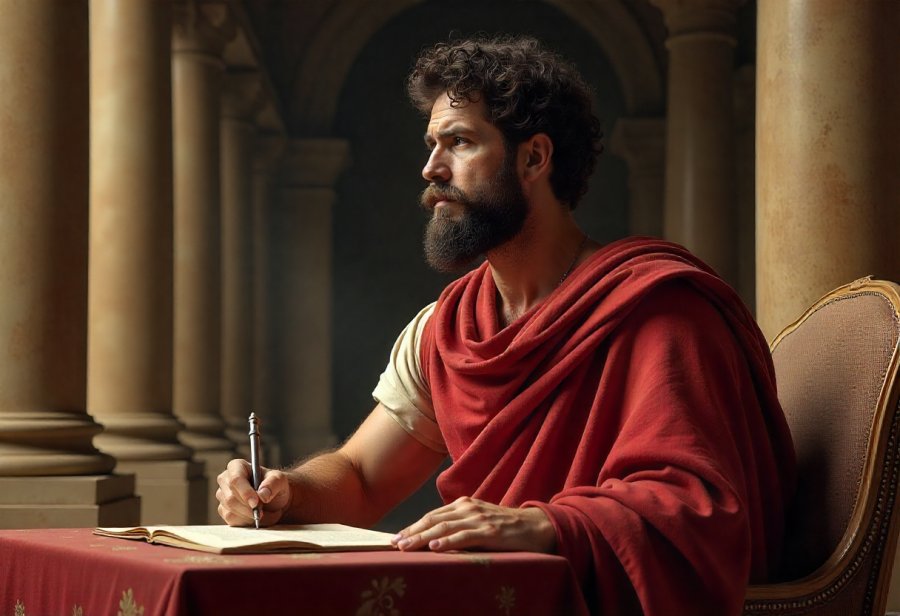
Discover the astonishing life of Alexander the Great, a young king whose strategic genius and bold vision transformed the ancient world. His campaigns didn’t merely expand borders—they fostered a cultural fusion that bridged East and West, leaving a legacy of cities, ideas, and innovations that endured long beyond his short reign. Yet, beneath the triumphs lies a complex legacy: was his empire driven solely by ruthless conquest, or by a profound desire to unite diverse civilizations? From his early education under Aristotle to his daring battles across Persia and India, Alexander’s story is one of daring ambition and transformative impact. His pursuit of cultural integration through Hellenization and city-building laid foundations that would shape future societies. But can the legacy of such monumental conquest truly be measured beyond the bloodshed? His life challenges us to reconsider what defines greatness—whether in empire or in the enduring bonds it forges across cultures.
Alexander the Great: A Legacy of Vision and Conquest
Alexander the Great stands out as one of history’s most influential military minds and visionary leaders. His campaigns didn’t just push borders outward—they transformed entire cultures and reshaped the political landscape across three continents. His ability to combine strategic brilliance with daring innovation made him a figure whose legacy continues to resonate today. More than a conqueror, Alexander aimed to create a unified empire rooted in cultural fusion and shared ideals, seeking to bring together peoples from vastly different backgrounds under a common identity.
From a young age, Alexander’s life was marked by exceptional intelligence, charisma, and a fierce drive for leadership. Raised in Macedonia, he inherited a kingdom already on the rise under his father, King Philip II, a formidable military leader who had unified Greece. Educated by Aristotle, he was exposed to philosophy, science, and arts—broadening his horizons and nurturing his strategic thinking. These early influences—his noble background, rigorous education, and exposure to leadership—set the stage for his extraordinary ambitions.
His early years demonstrated a natural talent for leadership and daring. Even before inheriting the throne at 20, Alexander proved himself capable of quelling rebellions, founding cities, and inspiring loyalty among his followers. When his father was assassinated, he moved swiftly to consolidate power, displaying political acumen and military skill that would define his reign. These foundational years of leadership laid the groundwork for what would become one of history’s most ambitious empire-building endeavors.
Alexander’s military campaigns are legendary for their boldness and innovation. Beginning with his invasion of Persia in 334 BCE, he employed rapid movements, surprise attacks, and adaptable tactics to outmaneuver larger forces. Battles like Gaugamela and Issus showcased his mastery of terrain and psychological warfare—turning seemingly insurmountable odds into decisive victories. His leadership inspired fierce loyalty and motivated his armies to push further into unfamiliar lands, reshaping the ancient world in the process.
But his vision extended beyond conquest. Alexander sought to unify cultures, blending Greek traditions with those of the peoples he conquered. He founded cities like Alexandria, which became centers of learning and cultural exchange, and adopted local customs to foster loyalty. His policies of cultural fusion—Hellenization—laid the groundwork for a interconnected civilization that would influence art, science, and governance for centuries.
Ultimately, Alexander’s story is one of daring ambition and transformative impact. His leadership not only expanded the geographical boundaries of the known world but also ignited a cultural dialogue that would shape civilizations long after his empire fragmented. His legacy remains a testament to the power of vision combined with military genius, forever changing how we understand empire-building and leadership.
From Macedonia to Greatness: The Early Life and Influences of Alexander
Alexander the Great was born in 356 BCE in Pella, the heart of Macedonia. His royal lineage was impressive—his father, King Philip II, was a masterful military leader who had unified much of Greece under Macedonian control, turning a fragmented region into a formidable kingdom. His mother, Olympias, a princess from Epirus, was known for her fierce ambition and strong personality, qualities that deeply influenced Alexander’s early years. From the start, he was immersed in a world of leadership and warfare, gaining firsthand experience of kingship and military strategy.
His upbringing was carefully crafted to prepare him for greatness. Under the guidance of Aristotle, one of history’s greatest philosophers, Alexander received a rigorous education in philosophy, science, medicine, and literature. This broad curriculum was more than just an academic foundation; it nurtured his curiosity, sharpened his strategic thinking, and expanded his worldview. The lessons from Aristotle encouraged him to seek understanding beyond the battlefield, planting the seeds for his later policies of cultural fusion.
Even as a young prince, Alexander demonstrated exceptional intelligence and charisma. When his father was away on military campaigns, he was left in charge of Macedon, where he quickly proved himself capable of quelling rebellions, founding a city—later named Alexandria—and earning a reputation as a daring strategist. These early leadership experiences showcased his talent for command and his ability to inspire loyalty, setting him apart from other heirs apparent.
His royal birth placed him at the nexus of Macedonian political and military traditions. His father’s success in uniting Greece and building a powerful army created high expectations for Alexander. Olympias, his mother, played a crucial role in shaping his identity, often emphasizing his divine descent and fueling his belief in a destined greatness. Her fierce personality and ambitions helped cultivate his confidence and sense of purpose, pushing him toward the extraordinary future he would forge.
The assassination of Philip II in 336 BCE marked a turning point. At just 20, Alexander inherited a kingdom already on the rise but faced a turbulent political landscape. He swiftly moved to consolidate power, subduing rivals and rebellious city-states. His early acts of leadership—quickly securing his throne and demonstrating military prowess—laid the groundwork for his subsequent campaigns, driven by a vision that extended far beyond Macedonia.
Conquering the Known World: Strategies and Triumphs in Alexander’s Military Campaigns
Alexander the Great’s military campaigns are celebrated for their daring innovation and strategic brilliance. Starting with his invasion of Persia in 334 BCE, he relied on swift, unpredictable maneuvers that often outflanked larger forces. His surprise attack at the Battle of Granicus caught the Persian army off guard, setting the tone for a series of victories built on speed and adaptability. Battles at Issus and Gaugamela demonstrated his mastery of terrain and psychological warfare, turning seemingly insurmountable odds into decisive triumphs. His ability to read the battlefield and adjust tactics on the fly kept his enemies on the back foot.
What set Alexander apart was his talent for rapid adaptation and bold decision-making. At Gaugamela, he exploited terrain to strike from unexpected angles, using a combined arms approach that integrated infantry, cavalry, and archers. His troops trusted his daring tactics and unwavering confidence, which inspired loyalty even in the face of danger. This trust allowed him to push deeper into Persian territory, capturing key cities and strategic points while maintaining momentum. His campaigns weren’t just about brute force—they were about outthinking and outmaneuvering larger armies.
Alexander’s understanding of psychological warfare played a crucial role. He employed surprise and speed to keep Persian forces disoriented, often employing feints and flanking maneuvers. His reputation as an unstoppable leader grew with each victory, and he used diplomacy alongside military force to consolidate control. He forged alliances and adopted local customs, promoting a vision of cultural integration that extended beyond conquest. The founding of Alexandria in Egypt became symbolic of this blending—a city designed to be a hub of learning and cultural exchange.
His campaigns into Egypt and Persia weren’t just military conquests; they were acts of cultural fusion. Alexander adopted Persian dress, encouraged his soldiers to marry local women, and promoted policies that integrated Greek and Eastern traditions. These acts of cultural diplomacy helped solidify his rule and foster loyalty among diverse populations. His drive to unify different peoples under a shared identity was as much a part of his strategy as his battlefield tactics, laying the foundation for an interconnected empire.
Moving eastward into India, Alexander faced his most formidable challenge at the Battle of Hydaspes in 326 BCE. Despite being heavily outnumbered, he devised innovative tactics—crossing the river under cover of night and feigning retreat to trap King Porus’s forces. The battle was fierce, but his strategic ingenuity secured victory. Yet, after years of relentless fighting, his troops, exhausted and eager to return home, refused to march further into India. This marked the limit of his empire’s expansion and a sobering reminder of human limits.
Throughout his campaigns, Alexander demonstrated logistical mastery—moving armies across vast and varied terrains while maintaining supply lines and morale. His leadership inspired unwavering loyalty, even amid the hardships of long marches and fierce battles. His ability to motivate his troops through daring, confidence, and shared purpose was key to his rapid territorial gains. He understood that victory depended not only on tactics but also on the strength of his soldiers’ trust and commitment.
His conquests left a transformative legacy. They spread Greek culture, art, and governance into regions that had been isolated from Hellenistic influence. The cities he founded, especially Alexandria, became centers of learning, trade, and cultural exchange. His policies of cultural fusion created a shared identity that persisted long after his empire fragmented, shaping the subsequent Hellenistic world. His campaigns didn’t just expand territory—they forged a new interconnected civilization rooted in shared ideas and cooperation.
The Enduring Impact of Alexander’s Empire: Culture, Cities, and Civilizations
Alexander’s conquests left a profound and lasting influence on the ancient world, shaping both the cultural and political landscape across continents. His campaigns spread Greek language, art, and ideas into regions that had previously been isolated from Hellenistic influence, creating a legacy of cultural fusion that endures today. Cities like Alexandria in Egypt blossomed into vibrant centers of learning, commerce, and innovation, where Greek traditions mingled with local customs, fueling advancements in science, philosophy, and the arts. These urban hubs became symbols of a shared identity that united diverse peoples under a common cultural fabric.
However, the unity of Alexander’s empire proved fragile. After his sudden death in 323 BCE, his vast territory fractured as his generals, known as the Diadochi, fought fiercely for control. The empire was divided into several Hellenistic kingdoms, each continuing to influence regional politics and culture. Despite this fragmentation, the cultural exchanges and innovations cultivated during Alexander’s reign persisted, shaping civilizations long after political boundaries dissolved. His vision of a connected world endured through these enduring cultural foundations.
One of his most significant contributions was the founding of cities—most notably Alexandria—designed as centers of learning, trade, and cultural exchange. These cities became melting pots, where Greek art, science, and governance blended seamlessly with local traditions. This process of Hellenization created a shared cultural identity that transcended political borders, fostering cooperation and stability in a fragmented empire. His policies of cultural integration helped reduce resistance and build loyalty among diverse populations, leaving a legacy that extended well beyond military conquest.
Alexander’s approach to empire emphasized cultural fusion over domination. By adopting local customs and encouraging intermarriage, he challenged traditional notions of conquest as mere subjugation. His efforts to unify peoples through shared traditions and mutual influence fostered a sense of collective purpose. This strategy of blending traditions created a legacy rooted in diversity and cooperation, inspiring future leaders to see strength in cultural dialogue rather than conflict.
The cities he established became enduring symbols of knowledge and progress. Alexandria, in particular, became a beacon of learning, housing the famous Library of Alexandria and attracting scholars from across the Mediterranean. These centers of enlightenment promoted scientific inquiry, philosophical debate, and artistic innovation, shaping the intellectual landscape for centuries. The influence of Greek thought and governance embedded in these urban centers helped forge a shared heritage that outlasted political upheavals.
Despite the empire’s short-lived political unity, Alexander’s influence persisted through the spread of Greek language, art, and ideas. His policies set the stage for the Hellenistic period, a time of cultural flourishing that connected East and West. This era saw the emergence of new artistic styles, scientific advancements, and philosophical developments that reflected a synthesis of Greek and local traditions, fostering a sense of shared progress and cultural dialogue.
The legacy of Alexander the Great reminds us that conquest can serve as a catalyst for cultural vitality and exchange, rather than destruction alone. His vision of a world united through shared knowledge and mutual respect continues to inspire today’s ideas of global cooperation and multicultural integration. His life demonstrates that lasting influence often comes from fostering understanding and bridging differences, not just territorial expansion.
In the end, Alexander’s story is a testament to the power of vision and cultural fusion. While his empire was fleeting, the ideas, innovations, and shared traditions he ignited endured, shaping civilizations for centuries. His legacy encourages us to pursue ambitious goals with an appreciation for diversity and cooperation, illustrating how true greatness can be measured not just in land conquered, but in the lasting bonds forged across cultures.
Reflections and Lessons from Alexander’s Journey: The Future of Leadership and Unity
Alexander the Great’s achievements extend far beyond his battlefield victories, reshaping the course of history through a visionary approach to empire-building. His conquests did more than expand borders—they sparked a cultural revolution that would influence civilizations for centuries. The cities he founded, especially Alexandria, became vibrant centers of learning, commerce, and cultural exchange, blending Greek traditions with local customs. This fusion laid the groundwork for a connected world where ideas and innovations flowed freely across borders, fostering a shared identity across diverse peoples.
The legacy of Alexander remains a subject of spirited debate. Some view him as a visionary who sought to unify East and West through cultural integration, promoting progress and mutual understanding. Others see him as a ruthless conqueror whose ambitions resulted in destruction and suffering. Recognizing this complexity helps us appreciate the dual nature of his impact—both as a catalyst for cultural flourishing and a figure whose actions often came at a human cost. His story reminds us that greatness is rarely simple and that true influence often involves balancing vision with responsibility.
His empire’s brief existence underscores a vital lesson: even the most impressive achievements require strong, cohesive leadership to endure. Without a clear successor, the vast territory he united quickly descended into chaos, divided among rival factions. Yet, the ideas and cultural foundations he laid persisted, fueling the development of the Hellenistic world long after political unity dissolved. His emphasis on cultural fusion and shared knowledge created an enduring legacy, demonstrating that the most lasting influence is often rooted in shared understanding and cooperation.
Looking ahead, Alexander’s life offers valuable lessons for future leaders. His daring vision and strategic innovation show the power of boldness combined with adaptability. More importantly, his emphasis on respecting and integrating diverse traditions highlights the importance of cultural sensitivity in creating sustainable change. Leaders who foster understanding and embrace diversity can build stronger, more resilient societies—just as Alexander’s policies aimed to do through the blending of cultures.
Despite the political fragility of his empire, Alexander’s influence endured through the spread of Greek language, art, and ideas. His approach to cultural fusion and knowledge exchange laid the foundation for a vibrant, interconnected civilization that thrived long after his death. His vision of a world united by shared values and mutual respect continues to inspire efforts toward global cooperation today, reminding us that lasting impact comes from fostering understanding across differences.
In the end, Alexander’s story challenges us to look beyond mere conquest and to value the power of shared ideas, cultural dialogue, and unity. His legacy demonstrates that true greatness lies not only in territorial expansion but in the ability to connect and elevate diverse civilizations. His life encourages future generations to pursue ambitious goals with humility and respect, forging bonds that can shape a more interconnected and harmonious world.