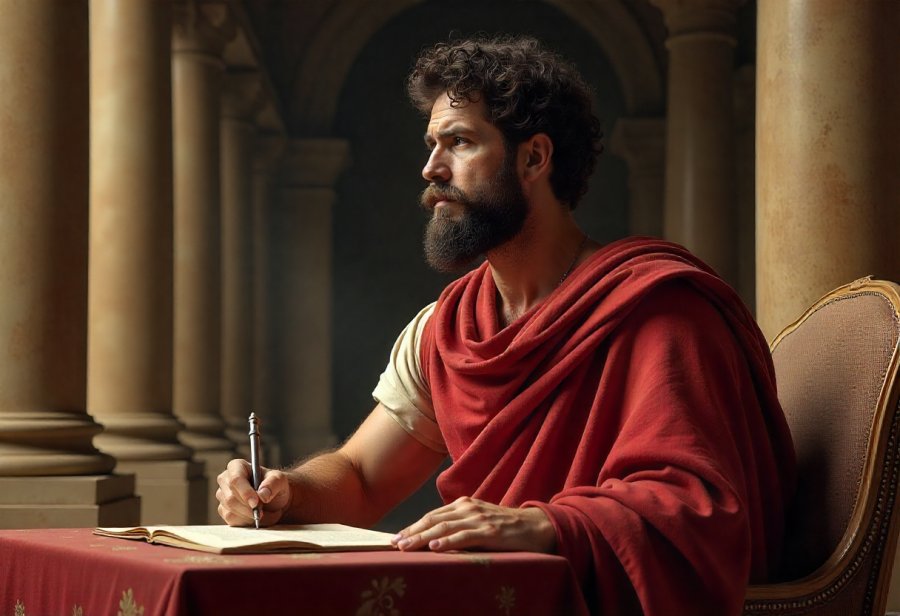
Uncover the extraordinary journey of Alexander the Great, a leader whose relentless ambition and strategic brilliance transformed ancient civilizations and redefined empire-building. From his early education under Aristotle to his innovative battlefield tactics, Alexander exemplified adaptability, cultural diplomacy, and personal courage. His mastery of combining military innovation with psychological warfare and diplomacy not only secured victory but laid the foundation for a legacy that continues to influence leadership today. But what lessons does his story hold for contemporary challenges—where rapid change, cultural complexity, and strategic agility are more vital than ever? Could embracing Alexander’s principles of flexibility, cultural understanding, and visionary purpose be the key to navigating our unpredictable world? As we explore his tactics and mindset, we are prompted to ask: How might future leaders emulate his resilience and ingenuity to forge enduring legacies in an era of constant flux?
The Rise of a Visionary Leader: Alexander the Great’s Origins and Education
Alexander the Great stands as one of history’s most compelling and transformative figures, embodying a rare fusion of strategic brilliance and unyielding ambition. His life’s journey from a young prince in Macedon to a conqueror whose campaigns reshaped entire regions exemplifies the profound power of visionary leadership. The very name “Alexander” continues to evoke images of daring innovation, relentless drive, and an insatiable desire to forge an empire that transcended borders and cultures. To grasp his significance fully, one must look beyond the military triumphs and consider the intricate mind that envisioned a world united under a single banner.
From his earliest years, Alexander’s upbringing played a pivotal role in shaping his extraordinary outlook. Educated under the tutelage of Aristotle, he absorbed lessons in leadership, ethics, philosophy, and the importance of understanding diverse cultures. This education was not merely academic; it was a forge for his emerging worldview—one that valued strategic adaptation, cultural synthesis, and intellectual curiosity. His noble heritage as the son of King Philip II provided him with a foundation of royal ambition and political acumen, while his scholarly training imbued him with a sense of purpose that extended beyond mere conquest. This unique blend of influence prepared him to challenge the status quo and envision an empire rooted in both military prowess and cultural integration.
The environment in which Alexander was raised was itself a complex tapestry of rivalry, conquest, and cultural exchange. The Greek city-states, with their fierce independence and martial traditions, fostered an ethos of valor and strategic ingenuity. Frequent conflicts among Athens, Sparta, and other poleis created a climate where military innovation was prized, and success in warfare elevated a city’s prestige. Simultaneously, the Persian Empire represented the ultimate challenge—vast, diverse, and layered with complex governance—standing as both a threat and an aspirational target. This juxtaposition of fractured Greek autonomy and Persian imperial grandeur shaped Alexander’s worldview, instilling a belief that victory required not only military strength but also diplomatic finesse and cultural understanding.
His father, Philip II, recognized the importance of this tumultuous landscape and actively sought to harness it. Philip’s military reforms—creating a professional army, developing the Macedonian phalanx, and forging strategic alliances—set the stage for Macedon’s rise as a regional power. These innovations emphasized the fusion of military innovation with diplomatic strategy, a blueprint Alexander would inherit and refine. His exposure to Philip’s reforms and the ongoing Greek rivalries underscored that victory depended on both battlefield prowess and political acumen. This environment, layered with rivalry and opportunity, cultivated a leadership style rooted in adaptability and a relentless pursuit of greatness.
Aristotle’s influence extended far beyond academic knowledge, shaping Alexander’s approach to conquest and governance. The philosopher’s teachings on cultural understanding, critical inquiry, and virtuous leadership provided a nuanced framework that Alexander would later apply across his expanding empire. Exposure to diverse ideas about governance and ethics fostered an intellectual curiosity that saw empire-building not solely as domination but as a means of cultural synthesis. This perspective was reflected in his efforts to incorporate local elites, promote intermarriage, and respect the traditions of the peoples he sought to rule. Such strategies distinguished him from other conquerors, emphasizing integration over mere suppression, and laid the groundwork for a legacy rooted in cultural diplomacy.
The ongoing conflicts among Greek city-states, including the Peloponnesian War and shifting alliances under the Corinthian League, further sharpened Alexander’s strategic sensibilities. These turbulent political landscapes created a dynamic environment where military tactics evolved rapidly, and success depended on innovation and alliance-building. Greek warfare, characterized by the hoplite phalanx, naval power, and strategic cooperation, served as both a training ground and a source of tactical insight. Witnessing these developments, Alexander learned that mastery in warfare required not just strength but also flexibility, timing, and the ability to exploit the weaknesses of enemies—lessons that proved vital when confronting the vast and complex Persian Empire.
In sum, Alexander’s early environment—shaped by fierce rivalry, cultural exchange, and strategic innovation—provided the fertile ground for his extraordinary ambitions. His education, noble lineage, and exposure to diverse political and military models equipped him with a panoramic view of empire-building as a synthesis of military strength, diplomatic finesse, and cultural understanding. It was within this intricate web of rivalry and opportunity that the seeds of his legendary pursuit of conquest were sown. From these foundations, he would go on to challenge the greatest civilizations of his time, transforming the concept of empire and redefining the very idea of leadership itself. This complex, layered background set the stage for a leader whose legacy continues to resonate across history.
Shaping Ambitions: The Greek and Persian Worlds That Forged Alexander’s Drive
The environment in which Alexander the Great was shaped was a complex tapestry woven from fierce rivalry, cultural exchange, and strategic innovation. On one side, Greece was a fragmented mosaic of city-states—Athens, Sparta, Corinth—each fiercely proud and fiercely independent. These poleis, often at odds, cultivated a martial ethos rooted in valor and ingenuity. Frequent conflicts, shifting alliances, and political machinations created a climate where military success was not merely a matter of strength but a means to elevate a city’s prestige. From an early age, Alexander absorbed this environment’s lessons: mastery of warfare and the ability to navigate complex diplomacy were essential to achieving lasting greatness.
Across the Aegean and into Asia, the Persian Empire stretched vast and layered, a symbol of imperial grandeur and administrative sophistication. To the Greeks, Persia represented both a cautionary tale of tyranny and an aspirational target for conquest. Its sprawling territories—from Egypt to the Indus Valley—housed a multitude of peoples, languages, and religions, all governed under a centralized monarchy that maintained control through a sophisticated bureaucracy and infrastructure. The sheer scale of Persia posed a daunting challenge; yet, it also embodied the pinnacle of imperial achievement—something Alexander was eager to surpass. The tension between Greek ideals of independence and Persian imperial dominance became a defining feature of his worldview, fueling ambitions that fused military prowess with diplomatic finesse.
Growing up amid this landscape of contrasts, Alexander was immersed in political complexity and cultural flux. His father, Philip II of Macedon, recognized that military strength alone would not suffice in such a turbulent environment. Philip’s reforms—creating a professional army, developing the Macedonian phalanx, and forging strategic alliances—laid the groundwork for Macedon’s ascendancy. These innovations emphasized the fusion of military innovation with diplomacy, a blueprint Alexander would inherit and refine. Exposure to Greek rivalries and Philip’s strategic reforms taught him that victory required both battlefield mastery and political agility—an understanding that would shape his approach to empire-building.
Aristotle’s mentorship further expanded Alexander’s perspective on conquest and governance. The philosopher’s teachings on cultural understanding, critical inquiry, and virtuous leadership provided a nuanced framework that Alexander would later apply across his vast domains. The exposure to diverse ideas about governance, ethics, and science fostered an intellectual curiosity that saw empire-building as a form of cultural synthesis rather than mere domination. This outlook was reflected in his efforts to incorporate local elites, promote intermarriage, and respect indigenous traditions—strategies that distinguished him from other conquerors and laid the foundation for a legacy rooted in diplomacy and integration.
The ongoing conflicts among Greek city-states, including the Peloponnesian War and the shifting alliances under the Corinthian League, further sharpened Alexander’s strategic sensibilities. These turbulent political landscapes created a dynamic environment where military tactics evolved rapidly. Greek warfare, characterized by the hoplite phalanx, naval power, and strategic cooperation, served as both a training ground and a source of tactical innovation. Witnessing these developments firsthand, Alexander learned that success depended on flexibility, timing, and the ability to exploit enemy weaknesses—lessons that proved vital when confronting Persia’s vast and diverse territories.
Meanwhile, Persia’s vulnerabilities remained ever-present as a backdrop to Alexander’s ambitions. Despite its formidable reputation, Persia’s size and administrative complexity created cracks that Philip II and later Alexander sought to exploit. Philip’s campaigns against Persian satrapies in Asia Minor demonstrated that the empire’s strengths could be turned into weaknesses through coordinated, innovative tactics. When Alexander inherited this strategic environment, he recognized that Persia’s sprawling reach was not invincible. His campaigns aimed to transform Persia from an abstract threat into a tangible goal—built upon a foundation of military ingenuity, strategic patience, and a keen understanding of its internal vulnerabilities.
In sum, Alexander’s early environment—marked by Greek rivalry, Persian imperial grandeur, and a landscape of continuous innovation—created fertile ground for his extraordinary ambitions. His education, noble lineage, and exposure to diverse political models equipped him with a panoramic view of empire-building. He saw it as a synthesis of military prowess, diplomatic finesse, and cultural understanding. Within this web of rivalry and opportunity, his relentless drive to unify and elevate these worlds took shape. It was this intricate landscape—where Greek independence clashed with Persian grandeur—that set the stage for Alexander’s legendary pursuit of conquest, ultimately transforming the ancient world and redefining the very concept of empire.

Mastering the Battlefield: Alexander’s Innovative Tactics and Leadership Strategies
Alexander’s military success was rooted in his mastery of innovative tactics and an extraordinary capacity for strategic flexibility. Unlike many of his contemporaries, who relied heavily on brute force or static formations, Alexander understood that battlefield dominance depended on adaptability and psychological impact. His ability to modify and execute tactics tailored to specific terrains and enemies often caught adversaries unprepared and outmaneuvered larger forces. This tactical ingenuity was not accidental but the result of careful reconnaissance, keen terrain awareness, and a deep understanding of his opponents’ vulnerabilities.
At the core of Alexander’s battlefield strategy was the seamless integration of the Macedonian phalanx with highly mobile cavalry units. The phalanx, composed of soldiers wielding long spears and fighting in a dense, unified formation, provided a formidable defensive wall and a platform for sustained offense. Complementing this was his cavalry—swift, flexible, and capable of executing rapid flanking maneuvers, encircling enemies, and striking at their weakest points. The combination created a dynamic battlefield presence that could shift from defensive to offensive in moments, keeping opponents off balance and forcing them into reactive positions.
Alexander’s use of deception and psychological warfare further amplified his tactical advantage. He frequently employed feints, false retreats, and surprise attacks to destabilize larger or more entrenched armies. Against Persian satrapies, for example, he would feign retreat to lure enemies into vulnerable positions, then turn with devastating force. His mastery of psychological tactics often shattered enemy morale before the first sword was drawn. This dimension of warfare—using fear, confusion, and uncertainty—meant that victory was often achieved long before the clash of weapons, as the enemy’s will was broken through psychological dominance.
Crossing rugged mountain ranges into Persia exemplified Alexander’s willingness to adapt his tactics to difficult terrains. He employed innovative strategies such as using local guides to navigate treacherous passes and exploiting natural features for defensive or offensive advantage. His campaigns into India further showcased his flexibility; facing unfamiliar river crossings, monsoon conditions, and unfamiliar terrains, he devised new logistical arrangements and battlefield formations suited to each environment. Such adaptability was vital in maintaining momentum across vast, diverse landscapes where conventional tactics might falter.
Personal leadership played an equally crucial role. Alexander often led from the front, actively participating in critical moments of battle. His presence on the front lines was not merely bravado but a deliberate move to motivate his troops and demonstrate unwavering resolve. This personal example of courage and confidence inspired loyalty and instilled a shared sense of purpose among his soldiers. His willingness to risk himself, to share in the hardships, created a cohesion that proved essential in the face of daunting challenges and formidable enemies.
Alexander’s strategic vision extended beyond immediate battlefield victories. He aimed to forge a cohesive, culturally integrated empire. This objective influenced his tactical choices—employing diplomacy and cultural diplomacy alongside military force. After victory, he often incorporated local elites into his administration and promoted intermarriage, fostering loyalty and stability. His understanding that conquest alone was insufficient for long-term stability led him to build networks of influence rooted in cultural respect and political integration, ensuring that his military successes translated into sustainable governance.
Throughout his campaigns, Alexander demonstrated an exceptional ability to adjust his tactics based on evolving circumstances. Whether fighting in the open plains of Persia or navigating narrow, rugged passes in Central Asia, he refused to rely on a single formula. Instead, he analyzed each situation carefully, deploying the right mix of formations, timing, and psychological tactics. His capacity to think broadly—balancing immediate tactical needs with strategic objectives—was decisive in overcoming larger, entrenched enemies. This strategic flexibility cemented his reputation as a leader who could adapt swiftly and effectively, turning each challenge into an opportunity for victory.
In essence, Alexander’s conquest tactics combined innovation, psychological mastery, and personal leadership. His ability to adapt to terrain, exploit enemy weaknesses, and inspire his troops created a formidable blueprint for success. Each campaign was a testament to his strategic brilliance—an intricate dance of battlefield ingenuity and diplomatic finesse. His campaigns exemplify a leader who saw war as both a science and an art, blending technical mastery with intuition and charisma. This combination not only secured his victories but also laid the foundation for his enduring legacy as one of history’s greatest military strategists.
From Ancient Strategies to Modern Success: Applying Alexander’s Lessons Today
The strategic lessons exemplified by Alexander the Great resonate profoundly even in today’s complex and fast-evolving world. His capacity to adapt swiftly to changing circumstances remains a vital trait for modern leaders navigating unpredictable markets, geopolitical shifts, and technological disruptions. Flexibility is no longer a luxury but an essential component of effective strategy. Leaders who emulate Alexander’s willingness to modify tactics in response to new information and emerging challenges can better position their organizations for success. Cultivating an organizational culture that encourages experimentation, quick learning, and agility turns adaptability into a competitive advantage, allowing companies to pivot seamlessly and seize opportunities others might overlook.
Charismatic leadership, a hallmark of Alexander’s approach, continues to hold relevance in contemporary settings. His practice of leading from the front, demonstrating unwavering resolve, and actively participating in critical moments created a powerful emotional connection with his followers. Modern leaders can draw inspiration from this example by embodying authentic engagement and visible commitment. When leaders show genuine conviction and resilience, they inspire trust and motivate their teams to push beyond perceived limits. Such personal demonstration of purpose and dedication fosters loyalty and shared effort, especially during times of crisis or rapid change. In essence, leading with integrity and passion creates a ripple effect that elevates collective effort and sustains motivation over the long haul.
Cultural understanding and diplomacy, central to Alexander’s empire-building, are more vital than ever in our interconnected world. His strategy of integrating local elites, respecting customs, and fostering intermarriage reflected a sophisticated grasp of governance that built trust and stability. Today’s global organizations operate across diverse cultures, and effective leadership hinges on developing cultural intelligence. Leaders who listen, learn, and adapt their approaches to different perspectives can build stronger alliances and foster collaboration. Whether managing international teams or negotiating cross-border deals, the ability to bridge cultural divides echoes Alexander’s diplomatic finesse. It underscores that long-term success depends on respect, empathy, and the capacity to forge genuine partnerships rooted in mutual understanding.
Innovation in tactics and strategic thinking, pioneered by Alexander, offers timeless lessons in creative problem-solving. His willingness to challenge conventions—merging discipline with daring—transformed military strategy and demonstrated the power of cross-disciplinary thinking. Modern organizations thrive by encouraging teams to break down silos, leverage diverse skills, and embrace new technologies. Embracing experimentation, even at the risk of failure, often leads to breakthrough innovations. Leaders who foster environments of continuous learning and calculated risk-taking mirror Alexander’s spirit of ingenuity. They turn obstacles into opportunities, pushing boundaries and redefining what is possible in their fields.
The pursuit of a compelling vision was a driving force behind Alexander’s relentless campaigns. His ability to articulate a clear, inspiring purpose rallied his followers and sustained their efforts through hardships. Contemporary leaders can learn from this by crafting visions that resonate deeply and align with core values. When a vision ignites passion and provides a sense of higher purpose, it becomes a powerful motivator that sustains perseverance and loyalty. Whether leading a nation, a corporation, or a community, inspiring others with a meaningful goal elevates collective effort beyond short-term gains. It instills a sense of shared destiny that can carry initiatives to lasting impact.
Long-term success depends on integrating these timeless lessons into leadership development programs. Training future leaders to think broadly—balancing tactical flexibility, cultural intelligence, charisma, and innovative thinking—prepares them for the uncertainties ahead. Case studies of Alexander’s campaigns, emphasizing his strategic adaptability and visionary ambition, serve as powerful learning tools. Embedding these principles into curricula and organizational practices fosters a holistic leadership mindset. Such an approach cultivates individuals capable of navigating volatility with confidence, inspiring loyalty, and leaving enduring legacies—just as Alexander’s example has done for over two millennia.
As the world continues to evolve, the capacity to lead with both strategic intelligence and cultural sensitivity will distinguish the most effective leaders of tomorrow. Alexander’s legacy demonstrates that success hinges not solely on strength or resources but on the ability to inspire loyalty, adapt swiftly, and synthesize diverse influences into a coherent vision. Leaders who internalize these principles will be better equipped to manage the complexities of a rapidly shifting landscape. They will forge paths that are innovative yet sustainable, resilient yet inclusive. In doing so, they will honor the timeless insights of Alexander, shaping a future where leadership is characterized by flexibility, purpose, and the courage to confront the unknown.
Ultimately, the enduring lessons of Alexander the Great remind us that leadership is an ongoing journey—one that demands continuous adaptation, learning, and vision. The most impactful leaders recognize that setbacks are opportunities for growth and that true resilience stems from a willingness to challenge conventions and embrace change. As history reveals, the most lasting legacies are built on a foundation of agility, integrity, and a relentless pursuit of higher ideals. By studying Alexander’s example and applying his principles thoughtfully, future leaders can navigate uncharted territories, inspire enduring loyalty, and forge new paths that resonate across generations. His legacy continues to serve as a beacon for those daring enough to lead with courage, innovation, and purpose in an ever-changing world.
Future Horizons: How Alexander’s Principles Will Guide Next-Generation Leadership and Strategy
Looking ahead, the enduring principles exemplified by Alexander the Great are set to shape the evolution of leadership and strategy in a world that is becoming increasingly complex and interconnected. As global challenges grow more multifaceted—spanning geopolitical tensions, rapid technological advancements, and environmental crises—leaders will need to adopt a mindset rooted in adaptability, cultural intelligence, and visionary thinking. The core lessons of resilience, tactical innovation, and inspiring loyalty remain timeless, but their application must now be embedded within frameworks of international diplomacy, organizational agility, and technological integration. Leaders who draw upon Alexander’s legacy will recognize that flexibility is not merely advantageous but essential for navigating today’s unpredictable landscape.
In an era characterized by rapid change, the capacity to pivot quickly—mirroring Alexander’s ability to adapt tactics on the fly—becomes a fundamental trait of effective leadership. Leaders must develop agility to reassess strategies in real time, leveraging emerging technologies, data analytics, and market insights to stay ahead of competitors and address unforeseen crises. Cultivating a culture that encourages experimentation, quick learning, and resilience transforms organizational responsiveness from a reactive afterthought into a strategic strength. Just as Alexander exploited opportunities through swift tactical shifts, modern organizations that embrace flexibility will better seize emerging trends and avoid stagnation.
Cultural intelligence will play an increasingly vital role in shaping future leadership. Alexander’s success hinged on his ability to understand, respect, and incorporate diverse cultures into his expanding empire. He recognized that long-term stability depended on fostering trust, respecting local customs, and promoting intermarriage and cooperation. Today’s globalized environment demands that leaders develop cultural empathy, listen actively, and adapt their approaches to different perspectives. Whether managing international teams, negotiating cross-border deals, or building global alliances, the capacity to bridge cultural divides echoes Alexander’s diplomatic finesse. Building genuine relationships rooted in mutual respect is no longer optional; it’s a strategic imperative.
Innovation in tactics and strategic thinking, pioneered by Alexander, offers timeless lessons in creative problem-solving. His willingness to challenge conventions—merging discipline with daring—transformed military strategy and demonstrated the power of cross-disciplinary thinking. Modern organizations thrive by encouraging teams to break down silos, leverage diverse skills, and embrace new technologies. Embracing experimentation and calculated risk-taking often leads to breakthroughs and competitive advantages. Leaders who foster environments of continuous learning and agility will emulate Alexander’s spirit of ingenuity, transforming obstacles into opportunities and redefining what is possible in their fields.
The pursuit of a compelling vision fueled Alexander’s relentless campaigns. His ability to articulate a clear, inspiring purpose rallied his followers and sustained their efforts through hardships. Contemporary leaders can learn from this by crafting visions that resonate deeply and align with core values. When a vision ignites passion and provides a sense of higher purpose, it becomes a powerful motivator that sustains perseverance and loyalty. Whether leading a nation, a corporation, or a community, inspiring others with a meaningful goal elevates collective effort beyond short-term gains, fostering a shared sense of destiny that endures through challenges and time.
Embedding these lessons into leadership development ensures that future generations are prepared for the uncertainties ahead. Training programs that highlight Alexander’s adaptability, charisma, cultural intelligence, and innovation cultivate a holistic leadership mindset. Case studies of his campaigns—showcasing strategic flexibility and visionary ambition—serve as powerful learning tools. Organizations and educational institutions that emphasize these qualities will develop leaders capable of navigating volatility with confidence, inspiring loyalty, and leaving enduring legacies. This comprehensive approach fosters resilience and agility, essential traits for guiding organizations and nations through turbulent times.
As the world continues to evolve at an unprecedented pace, the ability to lead with both strategic intelligence and cultural sensitivity will distinguish the most effective leaders of tomorrow. Alexander’s example demonstrates that success depends not solely on strength or resources but on inspiring loyalty, adapting swiftly, and synthesizing diverse influences into a coherent vision. Leaders who internalize these principles will be better equipped to manage the complexities of a rapidly shifting landscape. They will forge innovative, sustainable paths that balance ambition with responsibility, resilience with inclusivity, and technological progress with human values.
The lessons of Alexander the Great serve as a reminder that leadership is an ongoing journey—one that demands continuous adaptation, learning, and a willingness to challenge the status quo. The most impactful leaders recognize that setbacks are opportunities for growth and that true resilience emerges from embracing change rather than resisting it. By studying Alexander’s example and applying his principles thoughtfully, future leaders can navigate uncharted territories, inspire enduring loyalty, and forge new paths that resonate across generations. His legacy persists not only as a testament to military brilliance but as a blueprint for leadership in an ever-changing world, guiding those daring enough to lead with courage, innovation, and purpose into the future’s unknown.